

Thermoplastic Road Marking Paint Standards: AASHTO M249, BS 3262, EN 1871 and Global Requirements
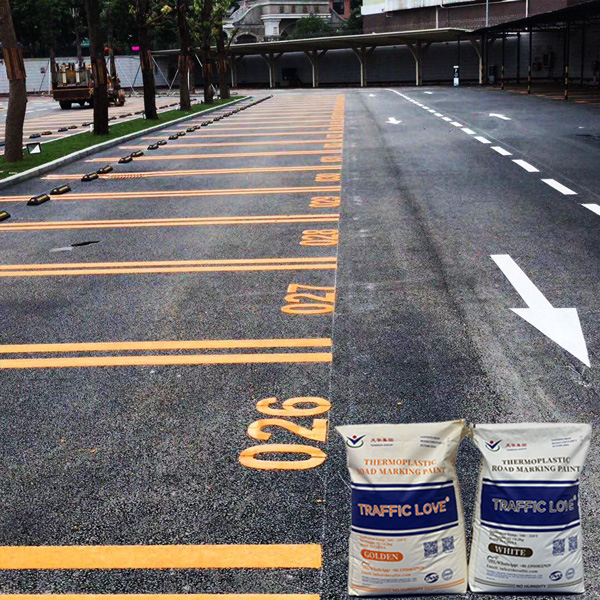
Thermoplastic road marking paint is widely used in highway and urban road projects due to its durability, high visibility, and long service life. Unlike cold-applied paints, thermoplastic materials are applied in a molten state and form a thick, wear-resistant layer once cooled. Because these markings directly affect road safety, international standards define strict requirements for material composition, application thickness, reflectivity, and mechanical performance.
Basic Principle of Thermoplastic Road Marking Systems
Thermoplastic road marking materials are heated to a molten state and applied to the pavement surface at elevated temperatures. After application, the material rapidly cools and solidifies, forming a dense, durable marking layer strongly bonded to the road surface.
Typical thermoplastic markings are applied at a thickness between 2 mm and 3 mm (approximately 100–150 mils). This thickness is significantly greater than solvent-based road paints and is one of the main reasons thermoplastic markings provide superior durability under heavy traffic conditions.
Key International Standards for Thermoplastic Road Marking Paint
Different regions of the world follow different technical standards when specifying thermoplastic road marking materials. The most widely referenced standards are outlined below.
AASHTO M249 – United States and Canada
AASHTO M249 is one of the most widely adopted standards for thermoplastic pavement marking materials in North America. It defines requirements for both white and yellow thermoplastic materials, including composition, softening point, flow characteristics, and resistance to deformation under heat.
The standard also specifies performance-related tests such as bond strength, wear resistance, and compatibility with reflective glass beads. Many international projects funded by multilateral agencies also reference AASHTO M249 due to its clear and performance-oriented requirements.
BS 3262 – United Kingdom and Commonwealth Countries
BS 3262 provides a comprehensive specification covering constituent materials, mixture composition, physical properties, and application practices for BS 3262 thermoplastic road marking materials. It also includes requirements for road performance, ensuring that markings remain visible and intact under real traffic conditions.
Countries within the Commonwealth and regions historically aligned with British engineering standards frequently use BS 3262 or derivative specifications in public works contracts.
EN 1871 – European Standard
EN 1871 establishes the physical and performance requirements for road marking materials within the European Union. It covers a wide range of products, including thermoplastic materials, cold plastics, and paints, and focuses on properties such as durability, color stability, retroreflectivity, and skid resistance.
EN 1871 is often used together with related standards for glass beads and application testing to ensure consistent performance across different European road networks.
TCVN 8791:2011 – Vietnam
Vietnam has adopted TCVN 8791:2011 to regulate road marking materials used on national and provincial roads. The standard reflects a combination of international practices, drawing technical references from both European and American specifications to suit local climate and traffic conditions.
ASTM D7735 – Hardness Testing at Elevated Temperature
ASTM D7735 specifies the test method for measuring durometer hardness of thermoplastic materials at elevated temperatures. This property is important for evaluating how thermoplastic markings behave under high pavement temperatures, particularly in tropical or desert environments where asphalt surface temperatures can exceed normal operating ranges.
Essential Material and Application Requirements
Application Thickness
International specifications consistently require thermoplastic road markings to be applied at a thickness of approximately 0.10 inch to 0.15 inch (2–3 mm). This thickness ensures sufficient material volume to resist abrasion from vehicle tires and maintainvisibility over extended service periods.
Applying markings below this thickness may reduce durability and cause early wear, while excessive thickness can lead to cracking or poor adhesion.
Application Temperature
Thermoplastic materials must be heated to a temperature typically ranging from 180°C to 220°C before application. Within this temperature window, the material reaches the required viscosity for proper flow, wetting of the pavement surface, and bonding strength.
If applied at temperatures below the recommended range, the material may not properly fuse with the pavement. Excessively high temperatures, on the other hand, can degrade binders and reduce long-term performance.
Performance Under Traffic and Weather
Once installed, thermoplastic road markings must remain stable under repeated traffic loading, temperature fluctuations, and exposure to sunlight. Standards therefore require materials to:
- Maintain structural integrity at high pavement temperatures
- Resist deformation or bleeding
- Provide adequate skid resistance even in wet conditions
These requirements ensure that road markings do not become slippery or visually unclear, both of which could compromise road safety.
Reflectivity and Glass Beads
Nighttime visibility of thermoplastic road markings is achieved through the use of reflective glass beads. These beads may be incorporated into the thermoplastic material as premix beads or applied onto the surface as drop-on beads during installation.
Premix beads help maintain reflectivity as the marking wears, while drop-on beads provide immediate retroreflectivity after application. Standards typically specify bead size distribution, refractive index, and application rate to achieve consistent reflective performance.
Pigments and Color Stability
Thermoplastic road marking materials must contain stable pigments to maintain color visibility under ultraviolet exposure and weathering. White thermoplastic materials typically rely on titanium dioxide for brightness and opacity, while yellow materials traditionally used chrome-based pigments, although modern formulations may use environmentally compliant alternatives.
Global Usage of Thermoplastic Road Marking Standards
| Region | Commonly Used Standard |
|---|---|
| United States and Canada | AASHTO M249 |
| United Kingdom and Commonwealth | BS 3262 |
| European Union | EN 1871 |
| Vietnam | TCVN 8791:2011 |
| Philippines | DPWH Department Order No. 103 |
Conclusion
Thermoplastic road marking paint remains one of the most reliable solutions for long-lasting pavement markings, but its performance depends heavily on adherence to international standards and proper application practices. Understanding the differences between AASHTO, BS, EN, and regional standards is essential for contractors, engineers, and procurement teams involved in modern road infrastructure projects.
By following established specifications for thickness, application temperature, reflectivity, and material composition, project owners can ensure that road markings deliver the required visibility and durability throughout their service life.