

How to Choose the Right Thermoplastic Road Marking Paint for Highways
By Alan Xie, International Projects Manager, Tianhua Group – Global Road Marking Solutions
How to Choose the Right Thermoplastic Road Marking Paint for Highways
Highway markings face heavier traffic loads, UV exposure, and harsher weather conditions than ordinary urban roads. Choosing the right thermoplastic road marking paint is not only about passing national standards—it is about ensuring visibility, long-term adhesion, and safe driving guidance under real traffic stress.
1. Understand the Standard Requirements
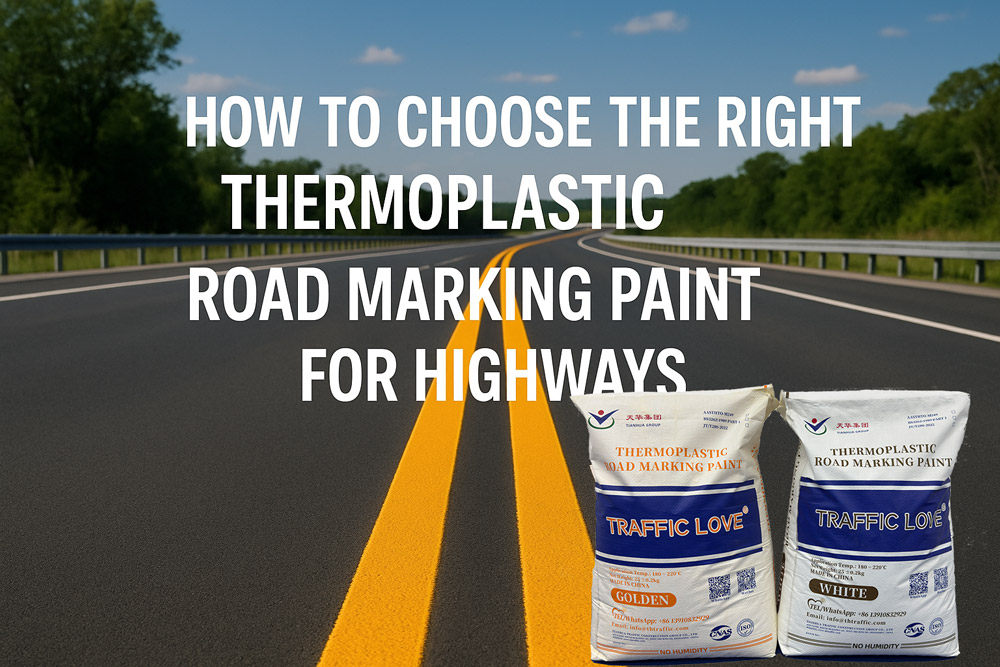
Different countries impose different performance criteria. For long-distance highways, the paint must achieve stable retroreflectivity, wear resistance, and color consistency. Here are the most commonly used references:
- AASHTO M249 – widely used for U.S. and international highway projects
- EN 1871 / EN 1436 – European performance-based requirements
- JT/T280 – China’s widely applied standard for thermoplastic coatings
- SASO series – Gulf region hot climate specifications
Before selecting a product, confirm the project design code and make sure your supplier provides a batch test report that matches the required specification.
2. Match the Paint Formula to Local Climate
A formula designed for cold regions may crack under high temperatures, while a paint made for hot climates can become too soft in winter. When evaluating suppliers, always ask for:
- Softening point (soft roads demand a higher SP)
- Heat resistance for desert highways
- Low-temperature flexibility for mountainous or northern regions
- UV and color fade performance for sunny climates
Good manufacturers will offer climate-tailored formulas instead of “one-formula fits all.”
3. Choose the Correct Glass Bead Ratio
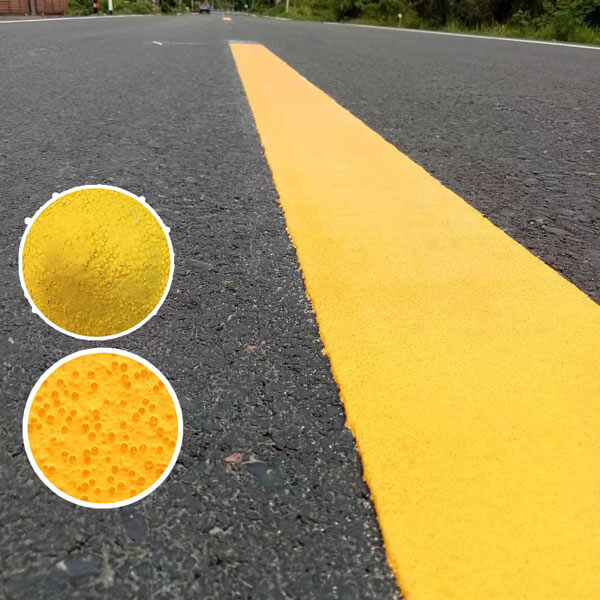
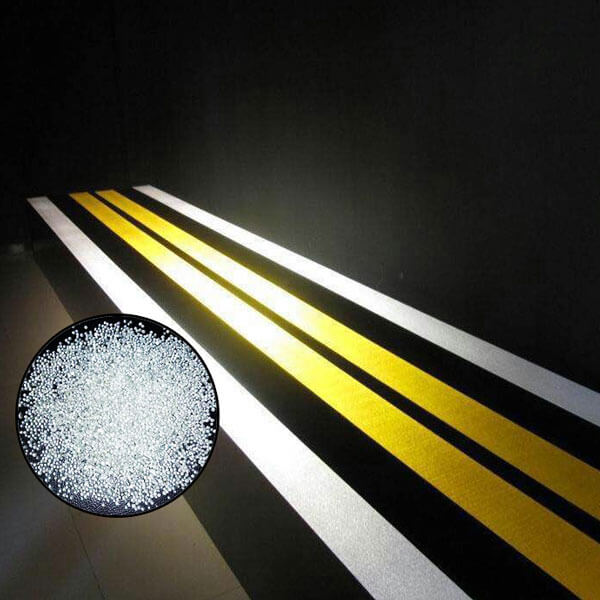
Reflective performance is crucial for nighttime highway driving. A balanced combination of surface-dropped beads and premixed beads determines how well the marking remains visible after months of abrasion.
For highways, most engineers prefer:
- Premixed beads: 20%–30% by weight
- Drop-on beads: 250–400 g/m², depending on speed class
The higher the bead quality (roundness and refractive index), the more stable the visibility.
4. Consider the Road Surface Condition
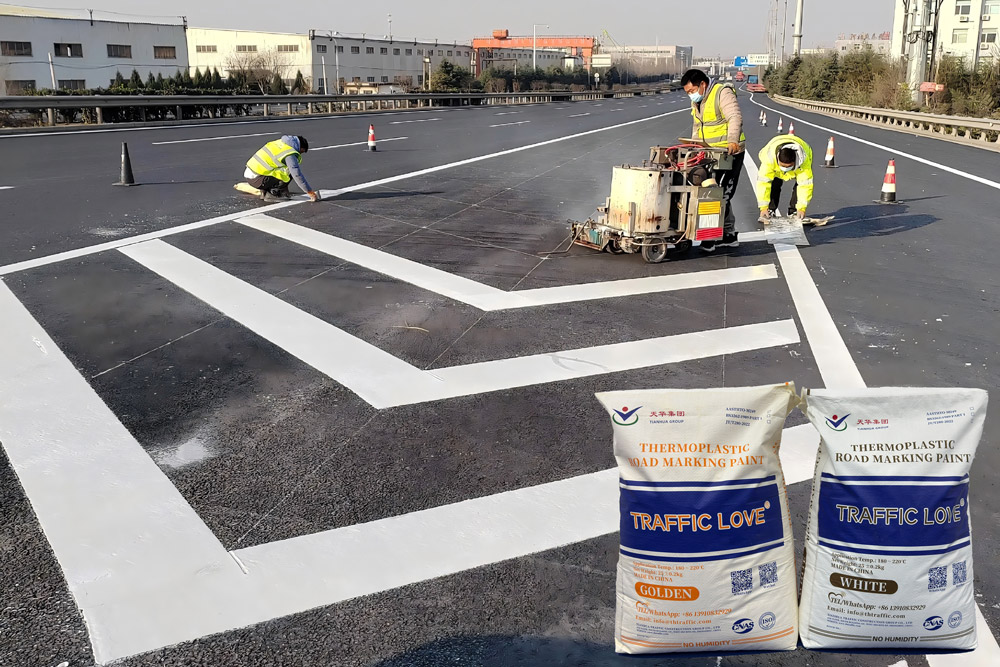
Old asphalt, new asphalt, concrete, and micro-surfacing layers all behave differently. For long highways, the primer system and resin composition must be tuned to ensure strong bonding.
- Concrete requires a stronger primer
- New asphalt may need anti-bleeding additives
- Worn surfaces require enhanced adhesion resin
Do not rely simply on “standard compliance”—bonding performance on your actual pavement condition matters far more.
5. Evaluate Long-Term Cost, Not Just Price
Thermoplastic road marking is a long-term asset. A slightly higher-grade paint often lasts 30–50% longer, reducing total maintenance frequency. When selecting a supplier, compare:
- Wear rate per million vehicle passes
- Retroreflectivity drop curve (RL values over 6–12 months)
- Expected service life based on local traffic volume
Highway agencies increasingly favor paints with stable long-term performance rather than chasing the lowest initial price.
6. Work With a Supplier Who Understands Highway Projects
Highway marking projects require more than just paint; engineers expect guidance on melting temperatures, glass bead application, safety, and material logistics. A reliable manufacturer should provide:
- Tailored formulas for climate and road type
- Technical data sheets and on-site application advice
- OEM service for contractors
- Joint-venture factory support for large distributors
- Flexible distributor policies (ship-first, friendly credit terms)
This assures stable supply for long highway sections and multi-year maintenance programs.
Factory Price & Supply Details
| Item | Specification | Factory Price (USD) | Supply Ability |
|---|---|---|---|
| White Thermoplastic | AASHTO / EN 1871 / JT/T280 | $270–$480 / ton | 35,000 tons / year |
| Yellow Thermoplastic | AASHTO / EN 1871 / JT/T280 | $290–$520 / ton | 35,000 tons / year |
| High-Reflective Mix | 30% premixed beads | $350–$580 / ton | 20,000 tons / year |
Conclusion
Selecting the right thermoplastic paint for highways is a technical decision. By considering standards, climate, bead ratio, pavement conditions, and overall life-cycle cost, you can secure markings that remain bright and durable for years. For contractors, distributors, and highway authorities, choosing an experienced supplier is the key to maximizing performance and minimizing maintenance.