
Questions to Ask Before Buying Thermoplastic Road Marking Paint | Buyer’s Guide
Thermoplastic road marking paint is often selected based on price per ton or initial test reports. However, experienced engineers and contractors know that many failures only appear after installation — when repainting, traffic disruption, and disputes become far more expensive.
Before placing an order, asking the right technical and commercial questions can prevent costly mistakes and ensure long-term performance. This guide summarizes the most important questions that should be answered before purchasing thermoplastic road marking paint.
1. Which Standard Does the Paint Truly Comply With?
Many products claim compliance with international standards, but compliance is not universal. Standards differ in softening point, luminance, skid resistance, and reflectivity requirements.
Key questions to ask:
- Is the paint formulated specifically for AASHTO, EN, BS, JT/T, SASO, or MS standards?
- Are the test reports issued by an accredited laboratory?
- Do field results match laboratory values?
A product designed for one standard may technically “pass” another, but often with compromised durability.
2. What Is the Designed Service Life?
Thermoplastic paint is selected for its durability, yet not all formulations are intended for the same lifespan.
Ask clearly:
- Is this formulation designed for 12 months, 24 months, or longer?
- What traffic volume is assumed in the design?
- Is performance guaranteed under heavy axle loads?
Shorter service life may reduce upfront cost but significantly increase total lifecycle cost.
3. How Much Glass Beads Are Intermixed?
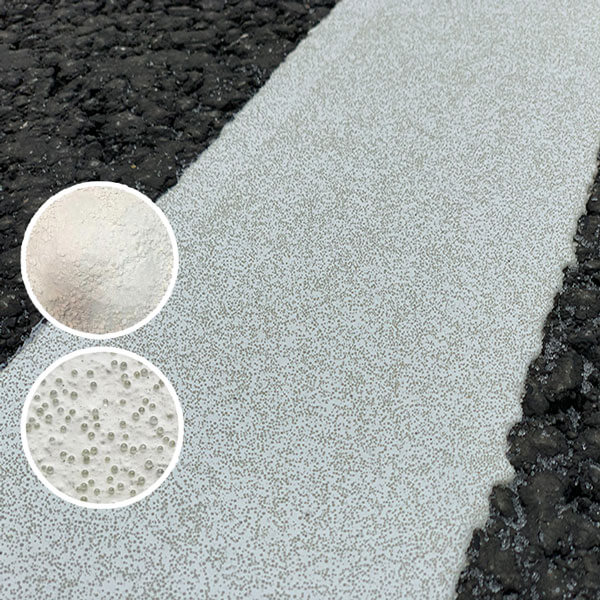
Glass beads determine night visibility and long-term reflectivity. Simply adding more drop-on beads does not compensate for insufficient intermixed beads.
Critical questions include:
- What percentage of intermixed glass beads is included (10%, 20%, 30%)?
- Which bead standard is used (AASHTO M247, EN 1423, BS, SASO)?
- Are bead gradation and roundness controlled?
For permanent markings, 20% or higher intermixed glass beads are typically required.
4. Is the Paint Compatible With Local Climate Conditions?
Climate has a direct impact on softening point, brittleness, and adhesion. Paints formulated for temperate climates may fail prematurely in hot or humid regions.
Ask:
- What is the recommended application temperature range?
- Has the paint been used in similar climates?
- How does it perform under high surface temperatures or heavy rainfall?
Climate-adapted formulations often outperform generic products even at similar cost.
5. What Is the Recommended Application Thickness?
Thickness directly affects durability, reflectivity retention, and material consumption.
Clarify:
- Is the recommended thickness 1.5 mm, 2.0 mm, or higher?
- Is the formulation optimized for screed, spray, or extrusion?
- How sensitive is performance to thickness deviation?
Paint that only performs well at excessive thickness may increase project cost significantly.
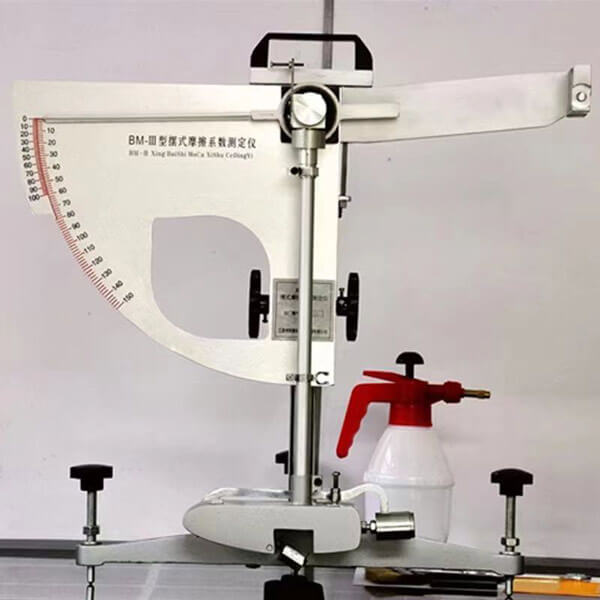
6. How Does the Paint Perform in Skid Resistance Tests?
Skid resistance is a safety-critical parameter, especially at intersections and pedestrian crossings.
Important considerations:
- What are the initial and retained skid resistance values?
- Is anti-skid aggregate required?
- How does skid resistance change after bead loss?
Balancing reflectivity and skid resistance requires careful formulation, not trial-and-error on site.
7. What Is Included Beyond the Material Itself?
Thermoplastic paint performance depends not only on material quality but also on proper application.
Ask suppliers:
- Is technical guidance provided for application?
- Are on-site training or supervision available?
- Is troubleshooting support offered during execution?
Reliable technical support can prevent failures that materials alone cannot fix.
8. How Consistent Is the Manufacturing Quality?
Batch consistency is often overlooked until variations appear on the road.
Ask about:
- Raw material sourcing and quality control
- Batch traceability
- Internal testing frequency
Consistent production is essential for large or multi-phase projects.
9. What Is the Real Cost Over the Project Lifecycle?
The lowest unit price rarely delivers the lowest overall cost.
Consider:
- Expected repainting intervals
- Traffic control and lane closure costs
- Labor and equipment reuse
A slightly higher material cost can often reduce total expenditure by extending repaint cycles.
10. Is the Supplier a Long-Term Partner?
Road marking projects often extend beyond a single shipment.
Final questions to ask:
- Can the supplier support future expansion or new standards?
- Are OEM or customized formulations available?
- Is the supplier capable of supporting local production or joint ventures?
Choosing the right supplier is as important as choosing the right paint.
Conclusion
Buying thermoplastic road marking paint is a technical decision with long-term consequences. By asking the right questions upfront, engineers and procurement teams can avoid premature failures, reduce maintenance costs, and improve road safety.
Informed purchasing is not about buying more — it is about buying right.