
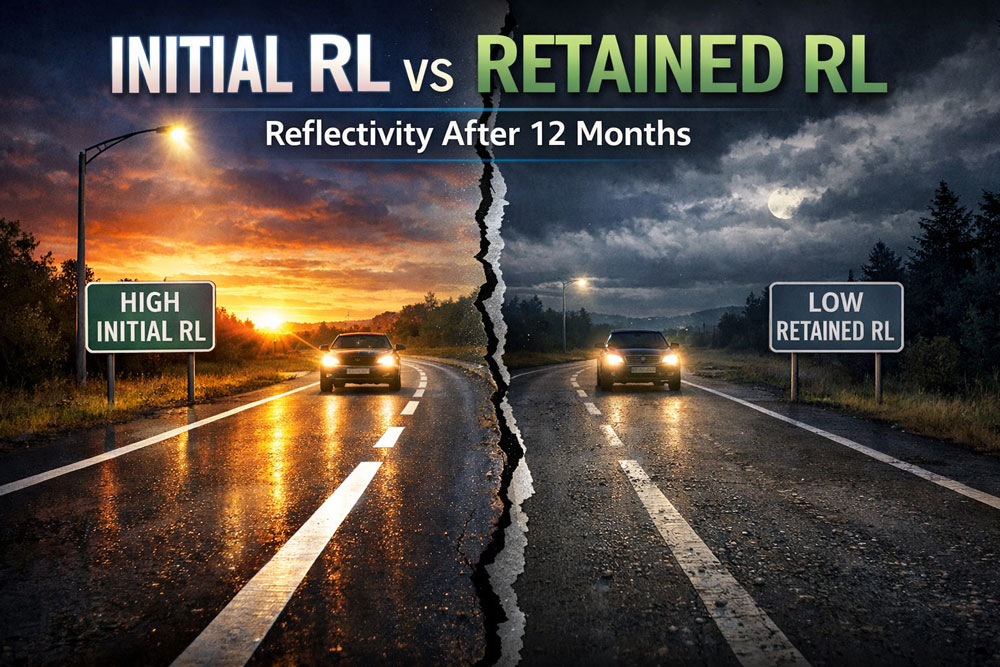
Initial RL vs Retained RL: Why Reflectivity After 12 Months Matters More Than Day One
Reflectivity (RL) is one of the most frequently referenced performance indicators for road markings. In many tenders, suppliers proudly present high initial RL values measured immediately after application. However, experienced engineers and inspectors understand that initial reflectivity alone does not determine road safety.
The true value of a road marking lies in how well it performs months — and years — after installation.
What Is Initial RL?
Initial RL refers to the retroreflectivity measured shortly after application, typically within 24–72 hours. This value is influenced by:
- Surface glass beads exposed at installation
- Clean pavement conditions
- Fresh thermoplastic binder
Under ideal conditions, many formulations can achieve very high initial RL readings. This makes initial RL a poor indicator of long-term quality when used alone.
What Is Retained RL?
Retained RL measures how much reflectivity remains after the marking has been subjected to:
- Traffic abrasion
- Weather exposure
- UV radiation
- Water, dust, and rubber deposits
Common evaluation periods include 6 months, 12 months, and sometimes 24 months after installation.
Why High Initial RL Can Be Misleading
High initial RL can be achieved through surface-heavy bead application. However, once these surface beads are worn away, reflectivity may drop sharply.
Typical causes of rapid RL loss include:
- Low intermixed glass bead content
- Weak binder-bead adhesion
- Incorrect bead gradation
- Over-polished surface beads
In some cases, RL can fall below acceptable limits within the first rainy season.
The Role of Intermixed Glass Beads
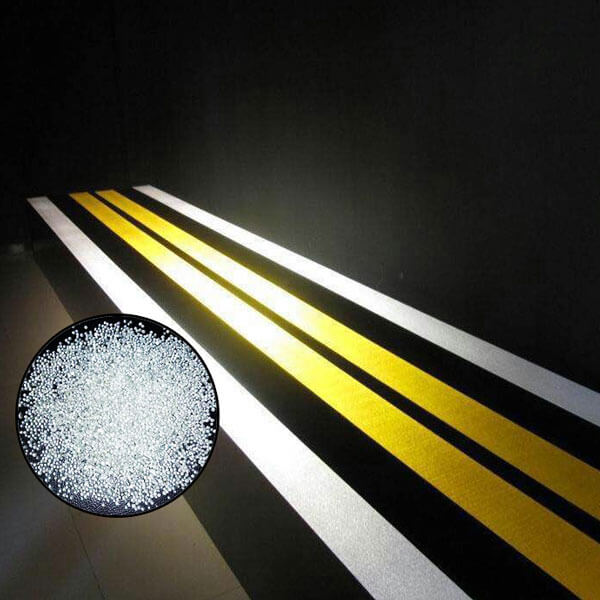
Retained reflectivity depends heavily on intermixed glass beads within the thermoplastic layer.
As surface beads are lost, embedded beads are gradually exposed, maintaining night-time visibility.
Engineered thermoplastic systems typically include:
- 10% intermixed beads for low-traffic roads
- 20% intermixed beads for urban and arterial roads
- 30% intermixed beads for highways and heavy traffic zones
This layered reflectivity mechanism is essential for sustained performance.
Standards That Emphasize Retained Performance
Modern standards increasingly recognize the importance of retained RL:
- EN 1436: Specifies RL classes and performance retention
- AASHTO M249: Focuses on durability and bead retention
- SASO / GCC standards: Emphasize real-service conditions
These standards acknowledge that road markings must perform under traffic, not only in laboratories.
Initial RL vs Retained RL: Practical Comparison
| Parameter | High Initial RL Focus | High Retained RL Focus |
| Day-One Appearance | Excellent | Very Good |
| Reflectivity After 6 Months | Significant Drop | Stable |
| Reflectivity After 12 Months | Often Below Limits | Within Specification |
| Maintenance Requirement | Frequent | Reduced |
Why Inspectors Care More About Retained RL
Field inspectors and road authorities prioritize retained RL because:
- It reflects real driver experience
- It correlates with accident statistics
- It reduces rework and maintenance disputes
A marking that looks perfect on day one but fails within a year creates long-term liabilities.
How Buyers Can Specify the Right Requirements
To avoid short-lived markings, tender documents should:
- Specify minimum retained RL values
- Define evaluation periods (e.g. 12 months)
- Require disclosure of intermixed bead percentage
- Link payment or warranty to retained performance
These measures align supplier incentives with long-term road safety.
Conclusion
Initial RL is easy to achieve and easy to market. Retained RL is harder to engineer — and far more valuable.
For authorities and contractors seeking durable, safe road markings, reflectivity after 12 months matters far more than reflectivity on day one.