
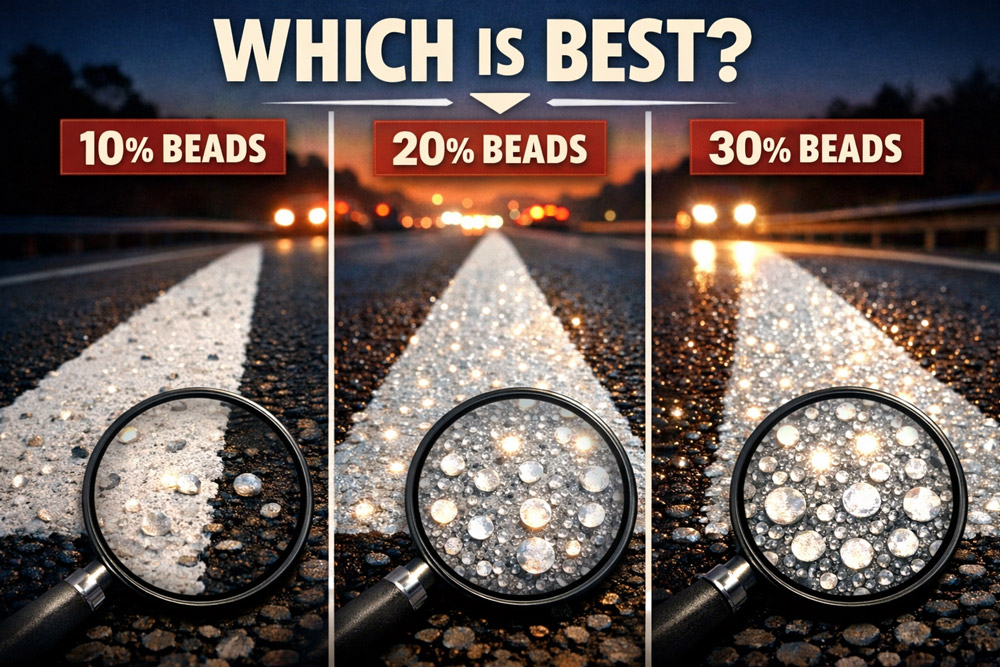
10% vs 20% vs 30% Glass Beads in Thermoplastic Road Marking Paint | Which One Do You Really Need?
Glass beads are the core element that determine whether a road marking is merely visible during the day or truly safe at night. Yet many procurement decisions focus only on price per ton, without understanding how glass bead content directly affects performance, service life, and long-term cost.
This guide explains the real differences between 10%, 20%, and 30% intermixed glass beads in thermoplastic road marking paint, based on field performance rather than laboratory theory.
Why Glass Beads Matter in Road Marking Paint
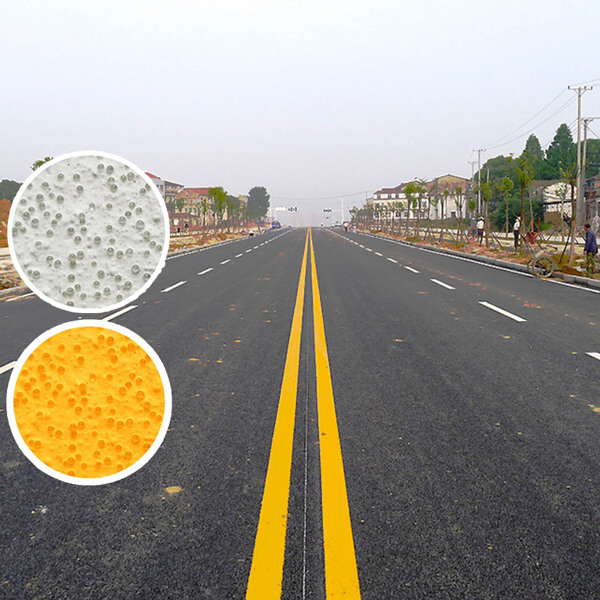
Glass beads create retroreflection by returning headlight beams back to drivers. In thermoplastic road marking systems, beads are used in two ways:
- Intermixed beads – blended into the paint for long-term reflectivity
- Drop-on beads – broadcast on the surface for immediate brightness
The percentage discussed in this article refers to intermixed glass beads by weight, which directly influences durability and retained night visibility.
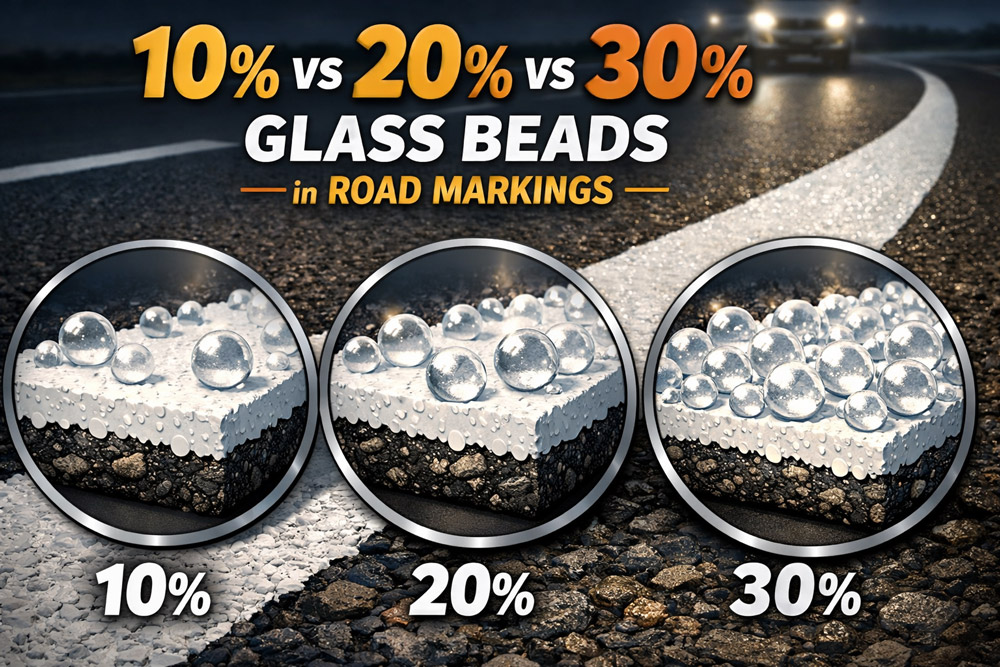
10% Glass Beads – Entry-Level Reflectivity
Thermoplastic paint with approximately 10% intermixed glass beads is commonly used in:
- Low-speed urban roads
- Rural roads with limited night traffic
- Temporary or budget-sensitive projects
While initial reflectivity can be acceptable when combined with sufficient drop-on beads, long-term performance is limited. As surface beads wear off, fewer embedded beads are exposed.
Key characteristics:
- Lower material cost
- Shorter retained reflectivity life
- More frequent maintenance cycles
20% Glass Beads – Balanced Performance for Most Roads
20% intermixed glass beads represent the most widely specified option for standard highways and urban arterial roads. This level provides a balance between reflectivity, durability, and cost control.
As the surface wears under traffic, new beads continuously emerge, maintaining night visibility over time.
Typical applications:
- National highways
- Urban expressways
- Municipal road networks
Why many engineers prefer 20%:
- Stable long-term RL values
- Compatible with most international standards
- Lower lifecycle cost than frequent repainting
30% Glass Beads – High-Performance & High-Traffic Solutions
30% intermixed glass beads are specified for demanding environments where safety margins must remain high even after significant wear.
This level is commonly required for:
- High-speed motorways
- Airports and toll plazas
- Regions with heavy rainfall or snow
- Mega infrastructure projects
Although material cost is higher, the retained reflectivity and extended service life often result in a lower total cost of ownership.
Comparison Table: 10% vs 20% vs 30% Glass Beads
| Glass Beads Content | Initial Reflectivity | Long-Term Durability | Typical Road Type | Lifecycle Cost |
| 10% | Moderate | Low | Local / Low-speed roads | High (frequent repainting) |
| 20% | High | Good | Urban & Highway roads | Balanced |
| 30% | Very High | Excellent | High-speed & critical routes | Low (long service life) |
Glass Bead Content and International Standards
Different standards specify minimum reflectivity values rather than fixed bead percentages. However, field experience shows the following alignment:
- AASHTO / ASTM: Typically achieved with 20–30% intermixed beads
- EN 1436 / EN 1871: Higher retained RL often requires 20%+
- BS Standards: Commonly paired with high-quality drop-on beads
- SASO: Frequently specifies higher performance for highways
Can Glass Bead Content Be Customized?
Yes. Professional manufacturers can adjust glass bead content based on:
- Traffic volume
- Climate conditions
- Target service life
- Local regulatory requirements
Custom formulations often combine optimized intermixed beads with carefully selected drop-on beads to achieve both immediate brightness and long-term performance.
Final Recommendation
Choosing between 10%, 20%, and 30% glass beads should never be based on material price alone. The correct choice depends on how long the marking must perform, how fast traffic moves, and how costly lane closures are.
In most cases, 20% is the minimum recommended level for permanent road markings, while 30% is justified for high-risk or high-traffic environments.
Understanding this difference is one of the simplest ways to reduce long-term maintenance cost while improving road safety.