
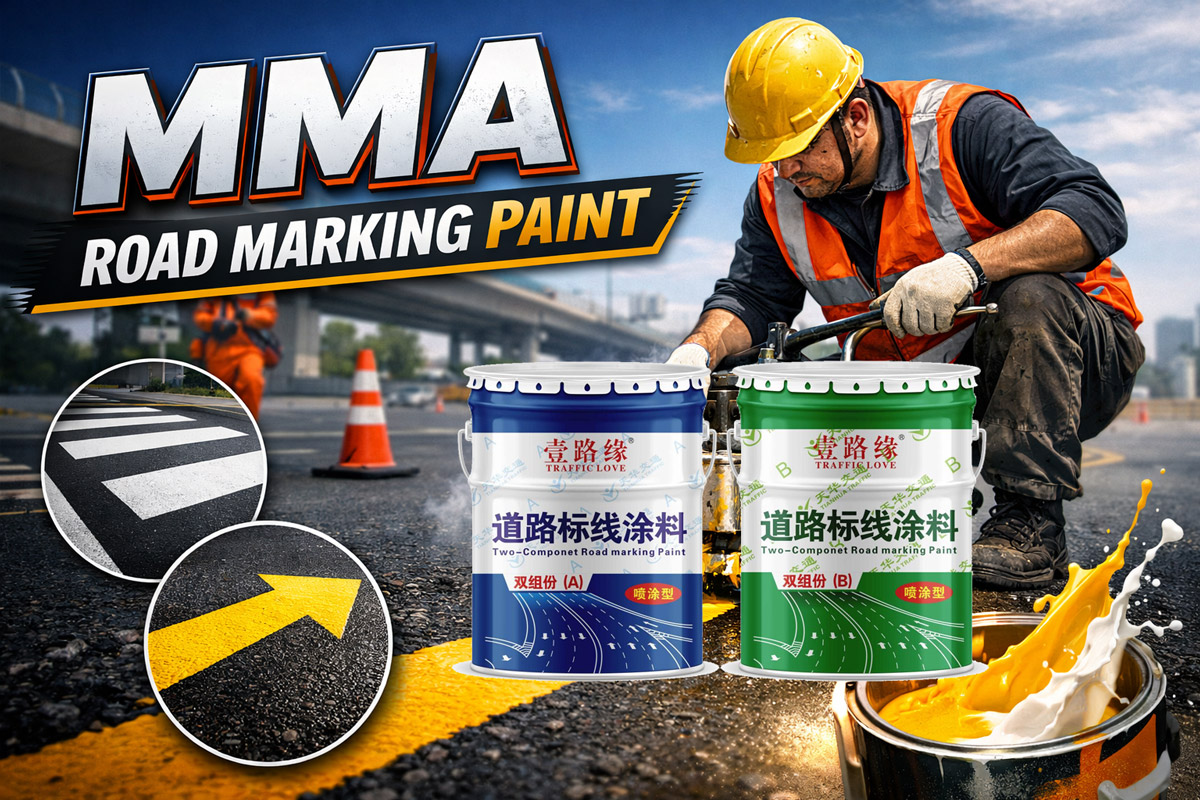
MMA Road Marking Paint GHS | Safety, Classification & Compliance Guide
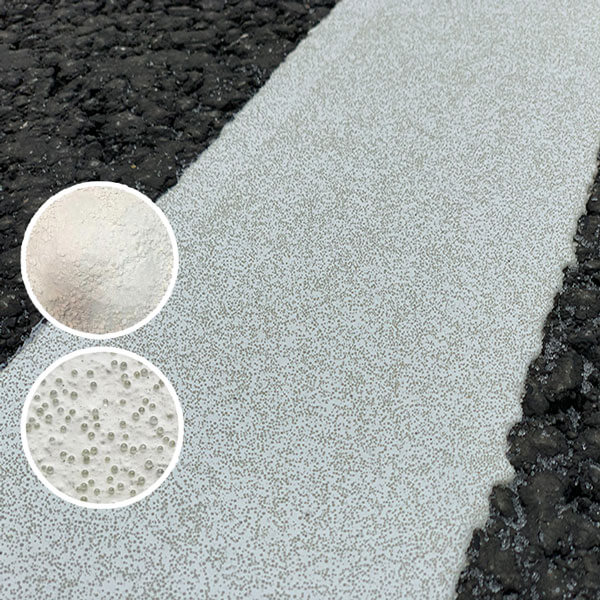
MMA (Methyl Methacrylate) road marking paint, also known as cold plastic road marking material, is widely used for high-performance road markings where fast curing, strong adhesion and long service life are required.
Because MMA systems are reactive chemical products, their production, transport, storage and use must comply with the Globally Harmonized System of Classification and Labelling of Chemicals (GHS).
What Is MMA Road Marking Paint?
MMA road marking paint is a two-component cold plastic system consisting of:
- MMA resin base
- Hardener / initiator (usually peroxide-based)
Once mixed, the material cures through a chemical reaction rather than solvent evaporation, forming a highly durable marking layer with excellent wear resistance.
Why GHS Matters for MMA Road Marking Paint
GHS provides a unified international framework for identifying chemical hazards and communicating safety information. For MMA road marking paint, GHS compliance is essential for:
- International transport and customs clearance
- Worksite safety management
- Environmental and occupational health compliance
- Government and airport project approval
Most countries now require GHS-compliant Safety Data Sheets (SDS) and labeling for MMA products.
Typical GHS Classification for MMA Road Marking Paint
While exact classification depends on formulation, MMA road marking paint generally falls into the following GHS hazard categories:
| GHS Hazard Category | Description |
|---|---|
| Flammable Liquid | MMA monomer has a low flash point and is classified as flammable |
| Skin Irritation | May cause skin irritation on prolonged contact |
| Eye Irritation | Vapors or splashes can irritate eyes |
| Specific Target Organ Toxicity (STOT) | High vapor concentration may affect the respiratory system |
The hardener component is usually classified separately and may carry stronger hazard warnings due to its reactive nature.
GHS Label Elements for MMA Road Marking Paint
A compliant GHS label typically includes:
- GHS pictograms (flame, exclamation mark)
- Signal word (Danger or Warning)
- Hazard statements (H-phrases)
- Precautionary statements (P-phrases)
- Product identifier and supplier information
Clear labeling is mandatory for both base resin and hardener containers.
Handling and Application Safety
During application, MMA road marking paint requires strict safety controls:
- Adequate ventilation in enclosed or urban areas
- Use of PPE (gloves, goggles, respiratory protection)
- Controlled mixing ratios to avoid excessive reaction heat
- No open flames or sparks near application zone
Because MMA cures rapidly, trained operators are essential to avoid material waste and safety incidents.
Transport and Storage Under GHS
For international transport, MMA road marking paint must comply with:
- UN packaging requirements
- IMDG / ADR / IATA regulations (depending on route)
- Temperature-controlled storage conditions
Base resin and hardener are usually shipped separately to reduce risk during transport.
Environmental Considerations
Although MMA systems are solvent-free after curing, emissions during application must be managed. Proper handling reduces:
- VOC exposure to workers
- Odor impact in urban environments
- Risk of spills or improper disposal
Many authorities require an approved SDS and environmental risk assessment before use on public roads.
Applications of MMA Road Marking Paint
- High-traffic urban intersections
- Bus lanes and cycle paths
- Airport runways and aprons
- Pedestrian crossings with heavy wear
- Areas requiring fast reopening to traffic
MMA vs Thermoplastic: Safety Perspective
Compared to thermoplastic materials:
- MMA has higher chemical hazard during application
- Thermoplastic has higher thermal hazard during melting
Both systems require professional handling, but MMA demands stricter chemical safety management under GHS.
Conclusion
MMA road marking paint delivers outstanding performance but must be managed responsibly. GHS compliance ensures that hazards are clearly communicated, risks are controlled, and international projects proceed without regulatory obstacles.
For global infrastructure projects, choosing a supplier that provides complete GHS documentation and technical guidance is as important as material performance itself.
Technical & Compliance Support
For GHS-compliant SDS, transport classification, or MMA system selection for specific projects, technical support should be engaged early in the procurement process.