
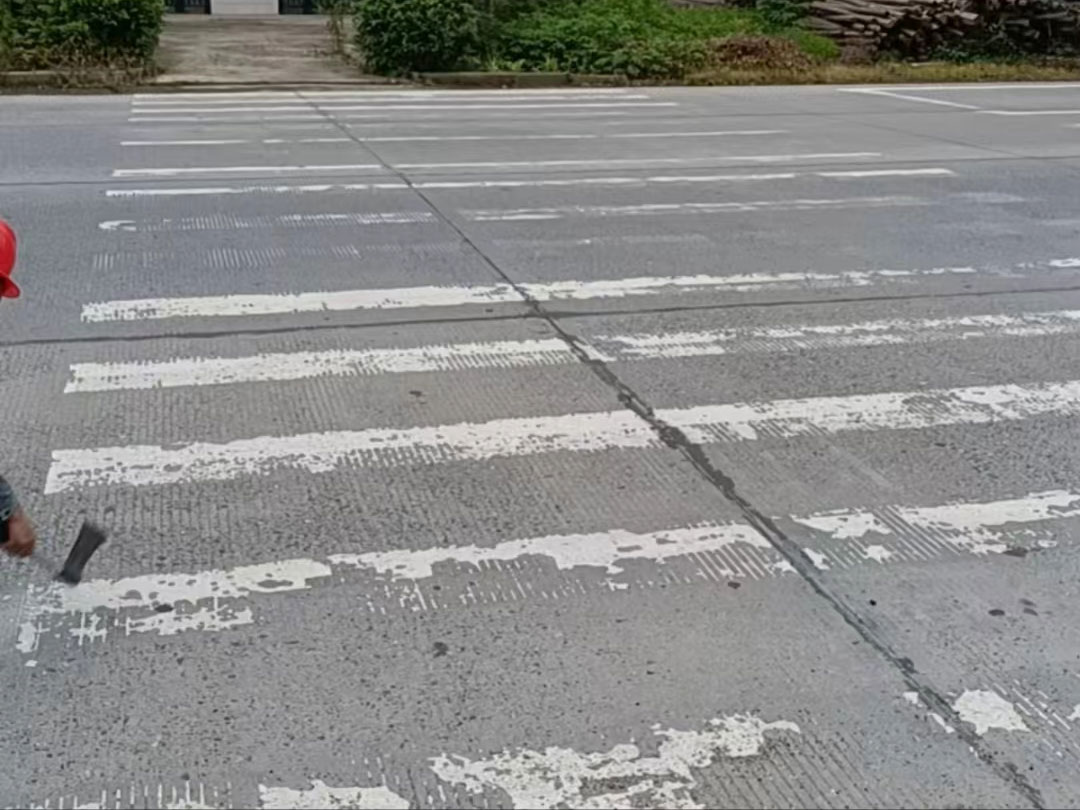
Why Local Thermoplastic Road Marking Paint Suppliers Often Fail on Long-Term Performance
Local thermoplastic road marking paint suppliers are often chosen for their convenience and proximity. In many cases, their products pass initial laboratory tests and site approvals. However, a common pattern emerges across projects worldwide: road markings that look acceptable at handover begin to deteriorate much earlier than expected.
Understanding why this happens is the first step toward selecting a more reliable supply partner.
Short-Term Compliance Does Not Guarantee Long-Term Performance
Most local suppliers focus on meeting the minimum specification required for tender approval. While this approach may satisfy initial inspection criteria, it does not ensure durability under real traffic and environmental conditions.
Long-term performance depends on how the material withstands:
- Continuous vehicle abrasion
- Seasonal temperature variation
- UV exposure and oxidation
- Moisture, dust, and surface contamination
When formulations are optimized only for initial compliance, service life is often compromised.
Unstable Raw Material Systems
Many local suppliers rely on short-term or spot-purchased raw materials. Even small variations in resin, filler, or pigment quality can lead to noticeable differences in performance.
These inconsistencies often result in:
- Fluctuating softening points
- Uneven wear resistance
- Color fading or yellowing
Such issues rarely appear during approval testing but become evident after months of service.
Reflectivity Loss Due to Inadequate Glass Bead Engineering
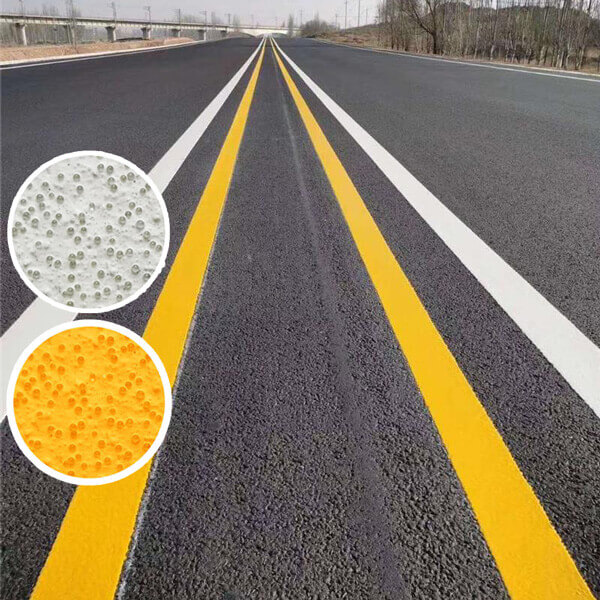
High initial reflectivity is often achieved through heavy surface bead application. Once surface beads are worn away, markings with insufficient intermixed beads quickly lose night-time visibility.
This is particularly problematic at intersections, highways, and heavy truck routes.
One Formula Applied to All Roads
Local suppliers frequently offer a single thermoplastic formulation for all projects. In reality, road marking requirements vary significantly based on traffic load, pavement type, and climate conditions.
Without project-specific formulation, early failure becomes a predictable outcome.
How Tianhua Traffic Group Addresses These Challenges
Tianhua Traffic Group approaches thermoplastic road marking paint as an engineered system rather than a commodity product.
1. Controlled Raw Material Supply Chain
Tianhua operates with a long-term, factory-controlled raw material system. Key components such as resins, fillers, pigments, and glass beads are selected and validated for consistency across batches.
This ensures stable performance not only in laboratory tests, but throughout the service life of the marking.
2. Project-Based Formulation Strategy
Instead of a one-formula-fits-all approach, Tianhua provides multiple thermoplastic grades designed for:
- Urban roads and intersections
- Highways and expressways
- Heavy traffic and industrial zones
- Hot, cold, and high-humidity climates
Formulations can be adjusted based on traffic volume, required glass bead percentage, and applicable standards.
3. Engineered Glass Bead Systems
Tianhua designs thermoplastic systems with both intermixed and drop-on glass beads. Typical intermixed options include:
- 10% for low-traffic roads
- 20% for urban and arterial roads
- 30% for highways and heavy-duty applications
This layered reflectivity approach supports stable retained RL over time, not just high initial brightness.
4. Compliance with Multiple International Standards
Tianhua thermoplastic road marking paint is developed to comply with major international standards, including:
- JT/T 280 series
- EN 1871 / EN 1436
- AASHTO M249
- SASO and other regional specifications
This flexibility allows contractors and authorities to use one reliable supplier across different projects and regions.
5. Distributor-Friendly Supply Policy
To support long-term cooperation, Tianhua offers:
- Factory-direct pricing
- Shipment-first models for qualified partners
- Friendly credit terms aligned with project payment cycles
These policies reduce financial pressure on contractors and distributors, especially in government-funded projects.
Conclusion
Local thermoplastic road marking paint suppliers often fail not because of intent, but because of structural limitations in materials, formulation, and quality control.
By combining controlled manufacturing, project-based formulations, engineered glass bead systems, and supportive commercial policies, Tianhua Traffic Group provides a long-term performance-focused alternative for road marking projects where durability truly matters.