
How to Choose a Road Marking Machine for Thermoplastic Paint Projects
Choosing the right thermoplastic road marking machine is an important decision for road construction contractors, traffic engineering companies and equipment distributors. The machine affects line quality, daily output, labor requirements and the efficiency of the entire marking operation.
However, the largest or fastest machine is not automatically the best choice. The right equipment depends on the marking material, required line width, project size, application method and the availability of a suitable thermoplastic preheater.
This guide explains the main factors to evaluate before purchasing a thermoplastic road marking machine from China, including equipment types, technical specifications, supporting equipment and questions to include in a supplier inquiry.
1. Confirm That Thermoplastic Is the Right Marking Material
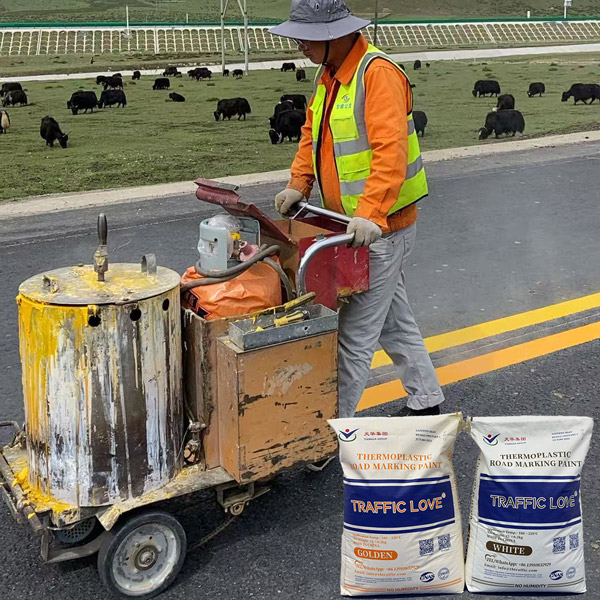
Before choosing a machine, confirm which road marking material the project will use. Thermoplastic road marking paint is heated until molten and then applied to the pavement using compatible marking equipment.
It is different from conventional cold-applied road marking paint, which is applied using a suitable liquid-paint spraying system. A machine designed for cold paint should not be assumed to handle molten thermoplastic.
If your project specifies thermoplastic material, review the product's recommended application temperature, application method and required line thickness before selecting the equipment.
Learn more about thermoplastic road marking paint and confirm that the proposed machine is suitable for the material you intend to use.
2. Choose the Right Type of Thermoplastic Road Marking Machine
Different machines are designed for different working conditions. The best option depends on the size of the project, the road layout, the required marking pattern and the available operating crew.
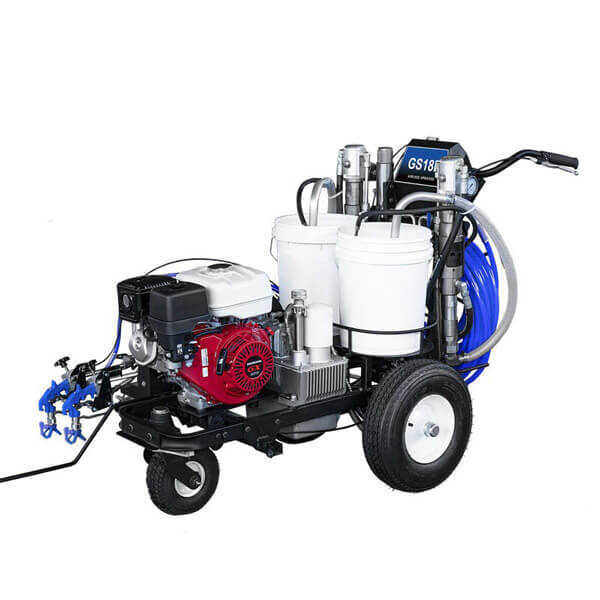
Hand-push thermoplastic road marking machines
Hand-push machines are worth considering for smaller projects, short line sections, intersections, pedestrian crossings and other areas where frequent positioning or changes in direction are required.
Buyers should check the machine's marking shoe, achievable line width, material feed system, operating weight and the effort required to move the equipment on site.
Self-propelled thermoplastic road marking machines
Self-propelled machines use a powered drive system to move during marking. They may be more suitable for projects involving longer continuous lines, repeated work and larger daily marking volumes.
Compare the travel-speed control, steering, working visibility, turning requirements and operator controls. Actual productivity depends on the complete workflow, not the machine's advertised maximum speed alone.
Integrated and separate preheater systems
Some equipment arrangements combine material heating and application, while others use a separate thermoplastic preheater to melt the material before transferring it to the marking machine.
A separate preheater may be appropriate when the project needs a continuous supply of molten material. An integrated arrangement may suit a different scale of work. Confirm the actual machine configuration and material-transfer process with the supplier.
View road marking machines from Tianhua Traffic to discuss the available equipment options.
3. Match the Machine to the Required Line Width and Thickness
Line dimensions should be established before selecting the marking shoe or application head. Standard longitudinal lines, wide transverse markings and special road symbols may require different configurations.
Ask the supplier to confirm:
- The available marking widths and shoe configurations
- The required line thickness and adjustment method
- Whether solid and broken lines can be applied as required
- Whether separate equipment is needed for arrows and symbols
- How line width and material flow are controlled
- How the finished line is checked during operation
The machine must maintain the required line geometry under actual working conditions. Line width, material output and travel speed work together to determine the amount of material applied.
Do not select a machine based only on its maximum advertised width. Confirm that the proposed configuration can produce the markings specified in your project.
4. Calculate the Required Daily Output
The expected daily marking workload helps determine whether a compact machine is sufficient or a higher-capacity system is justified. Consider the total line length, line width, required thickness, working hours and time needed for heating, refilling and repositioning.
A simple planning estimate for continuous solid lines is:
Theoretical material use (kg) = Line length (m) × Line width (m) × Line thickness (m) × Material density (kg/m³)
For example, a planned 10,000 m of solid line at 0.10 m wide and 0.002 m thick represents 2 cubic metres of marking material before allowing for the actual material density, application losses and project-specific adjustments.
This is a planning calculation, not a guaranteed consumption figure. The actual quantity depends on the material's density, line dimensions, surface conditions and application process.
Once the approximate material requirement is known, discuss the machine's practical output and the supporting preheater capacity with the supplier.
5. Select a Compatible Thermoplastic Preheater
The marking machine and preheater should be treated as parts of one operating system. If the preheater cannot supply molten material at the required rate, the marking machine may spend too much time waiting for material.
When evaluating a thermoplastic preheater, check the following:
- Working capacity and expected melting output
- Heating method and compatible fuel type
- Agitation and mixing arrangement
- Temperature monitoring and operating controls
- Material discharge and transfer method
- Mobility and transport arrangements
- Cleaning, maintenance and safety features
Capacity should be matched to the material consumption of the marking machine and the planned work schedule. A larger kettle is not automatically more efficient if the project cannot use the prepared material at an appropriate rate.
Confirm the required operating temperatures from the material manufacturer's instructions. Do not use one universal temperature setting for every thermoplastic formulation.
6. Check the Glass Bead Dispensing System
Reflective glass beads are used to help road markings remain visible under vehicle headlights. For projects that require surface-applied beads, the marking system should include a suitable bead application arrangement.
Ask whether the machine includes a bead dispenser or requires a separate accessory. Confirm how the application rate is adjusted and whether the bead flow can be checked during operation.
The paint, bead specification and application method should follow the project requirements. Uniform bead distribution is important, but the required application rate should be determined from the applicable specification rather than guessed from the machine's general description.
7. Consider the Road Surface and Operating Environment
Road surface conditions can affect marking quality and adhesion. Before choosing equipment, identify whether the project involves asphalt, concrete or another pavement surface, and whether surface preparation is required.
Also consider the operating environment:
- Ambient and pavement temperatures during application
- Rainfall, humidity and surface moisture
- Road gradients, curves and available working space
- Traffic management and site access restrictions
- Availability of fuel, power and maintenance support
- Transportation between project locations
A technically suitable machine cannot compensate for poor surface preparation or incorrect material handling. Confirm the required application procedures with the material supplier and project engineer.
8. Evaluate Maintenance, Spare Parts and Operator Support
A machine's purchase price is only one part of its long-term cost. Maintenance needs, consumables, downtime and spare-parts availability can all affect project economics.
Before purchasing, ask the supplier about:
- Operating and maintenance manuals
- Recommended spare parts and consumables
- Availability of replacement shoes, hoses and seals
- Burner and heating-system maintenance
- Cleaning procedures after use
- Operator training and technical support
- Warranty scope and after-sales arrangements
For overseas buyers, confirm the parts list and technical support arrangements before shipment. A spare part that is inexpensive but difficult to obtain may still cause costly downtime.
9. Compare Suppliers Using a Complete Equipment Specification
When requesting quotations from Chinese manufacturers, provide the same requirements to each supplier. This makes it easier to compare equipment configurations and avoid choosing a machine that does not match the intended project.
A useful request for quotation should include:
- Type of thermoplastic material
- Required line widths and thicknesses
- Expected daily marking distance or workload
- Hand-push, self-propelled or other preferred configuration
- Required preheater capacity and heating method
- Glass bead dispensing requirements
- Fuel or power requirements
- Destination country and delivery terms
- Spare parts, manuals and warranty requirements
Ask the supplier to identify the exact model being quoted, included accessories, excluded equipment, production lead time and packaging. Request operating videos or a demonstration where practical.
For a complete project, evaluate the machine, preheater, paint and glass beads together rather than comparing the equipment price in isolation.
10. Common Mistakes When Buying Thermoplastic Road Marking Equipment
- Choosing by maximum speed alone. Practical output also depends on refilling, heating, line layout and site conditions.
- Ignoring material compatibility. Confirm that the machine and application system are suitable for the selected paint.
- Underestimating preheater requirements. Match melting output to the machine's expected material consumption.
- Forgetting glass bead application. Confirm whether the project requires a bead dispenser and how it is configured.
- Overlooking maintenance support. Check manuals, spare parts and service arrangements before ordering.
- Comparing incomplete quotations. Review the full configuration, accessories, delivery terms and included services.
Frequently Asked Questions
What is the difference between a hand-push and self-propelled thermoplastic road marking machine?
A hand-push machine is manually moved by the operator and may suit smaller or more complex work areas. A self-propelled machine provides powered movement and may suit longer lines and larger workloads. The appropriate choice depends on the project layout and output needs.
Does every thermoplastic road marking machine need a separate preheater?
No. Some configurations use a separate preheater, while others integrate heating and application functions. Confirm the exact machine design and material-transfer process with the manufacturer.
Can one machine apply both thermoplastic and cold paint?
Not automatically. Thermoplastic and liquid cold paint use different application processes. Equipment should only be used with materials compatible with its heating, pumping and application systems.
What information should I provide to get an accurate quotation?
Provide the marking material, required line width and thickness, expected daily workload, preferred machine type, preheater requirements, glass bead system, destination country and required accessories.
Find the Right Thermoplastic Road Marking Equipment for Your Project
The right road marking machine should match the material, line dimensions, daily workload and operating conditions of the project. Before purchasing, confirm the equipment configuration, compatible preheater, bead dispensing system and maintenance requirements.
Tianhua Traffic Group supplies road marking equipment and related road marking materials for international buyers. Share your project requirements with the team to discuss suitable equipment options and a quotation.
Planning a thermoplastic road marking project? Contact Tianhua Traffic Group with your required line dimensions, expected workload and destination to start the equipment selection process.