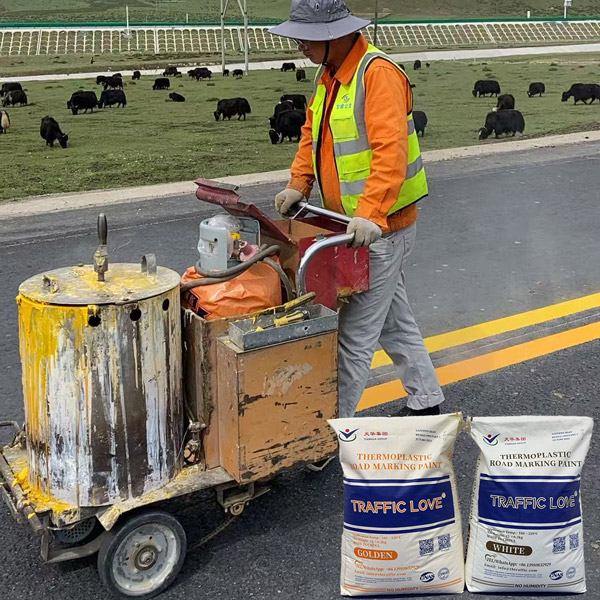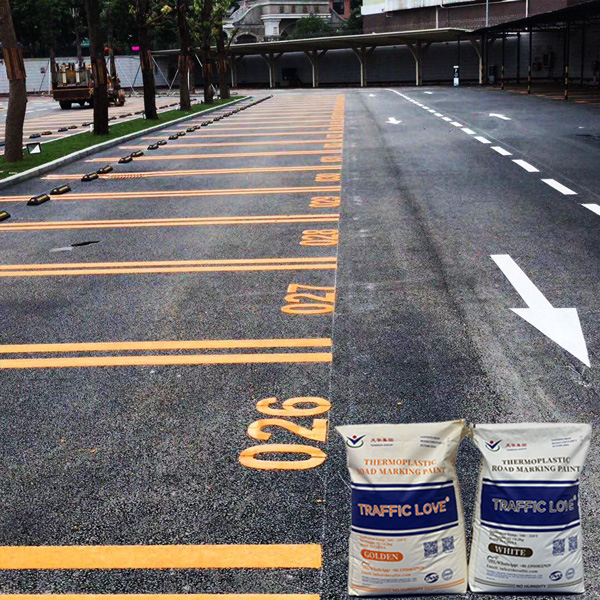

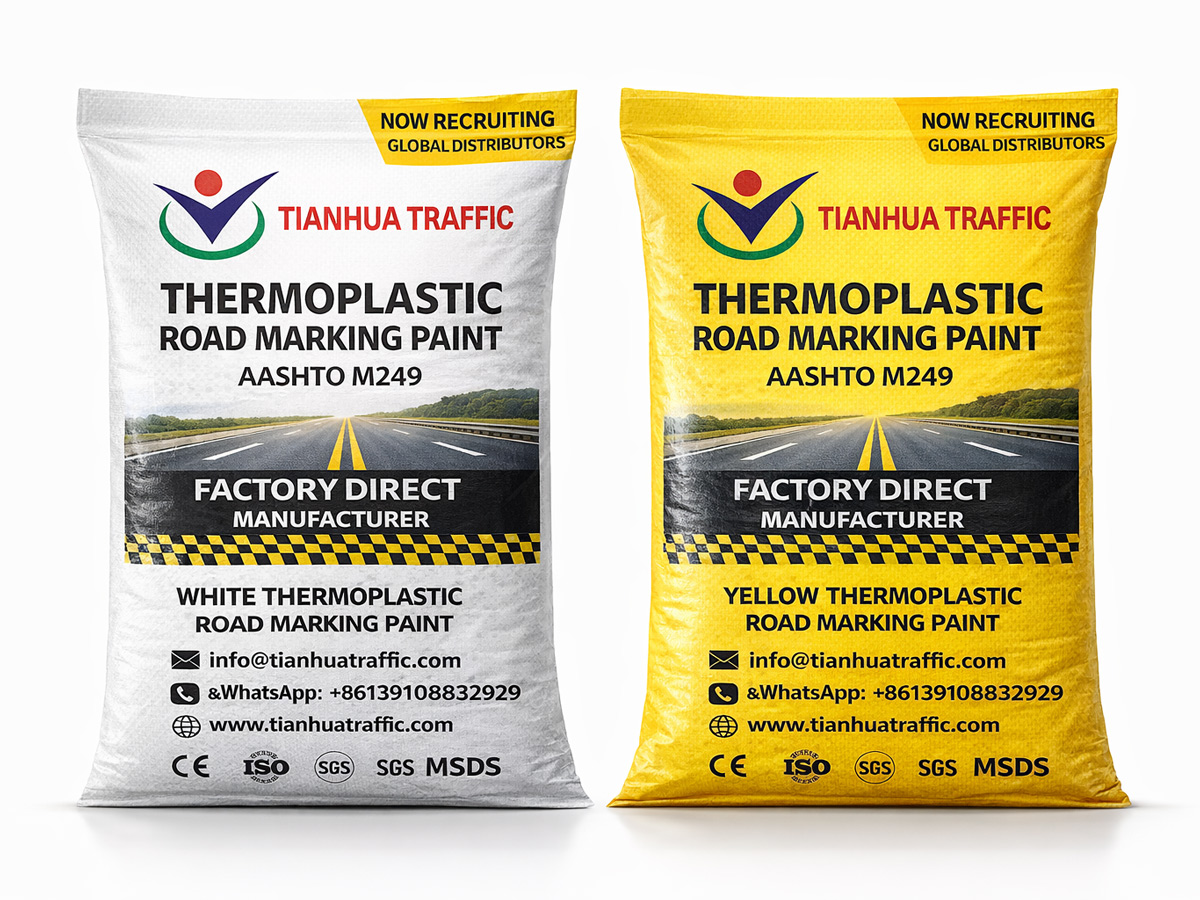
AASHTO M249 & BS 3262 Thermoplastic Road Marking Paint for Highway Applications
Highway road markings are subjected to the most demanding conditions in surface transportation: continuous heavy traffic, high speeds, axle loads, temperature extremes, and strict visibility requirements.
For this reason, AASHTO M249 (North America) and BS 3262 (UK and Commonwealth markets) have become two of the most widely recognized specifications for thermoplastic road marking paint designed specifically for highways.
This page explains the technical logic behind both standards, their practical differences, and what highway authorities and contractors should look for beyond “paper compliance”.
Why Thermoplastic Is the Preferred Material for Highways
Compared with cold paint or temporary coatings, thermoplastic road marking paint offers:
- High film thickness (typically 2.0–4.5 mm)
- Excellent abrasion and deformation resistance
- Long service life under heavy traffic
- Strong retention of glass beads for night visibility
Both AASHTO M249 and BS 3262 are built around these performance principles, with detailed control over raw materials, melting behavior, and durability.
AASHTO M249 Thermoplastic Road Marking Paint
AASHTO M249 is the standard specification for thermoplastic pavement marking material used on highways in the United States and many AASHTO-influenced international projects.
Key Design Intent of AASHTO M249
- Stable performance under high-speed, high-volume traffic
- Controlled softening point to prevent deformation in hot climates
- Compatibility with drop-on glass beads for retroreflectivity
Core Technical Requirements
- Specified resin and binder performance
- Strict limits on filler, pigment, and extender quality
- Defined softening point and heat stability
- Wear resistance under simulated traffic conditions
AASHTO M249 is commonly referenced in:
- Interstate highways
- State and federal road projects
- Export highways following U.S. DOT practices
BS 3262 Thermoplastic Road Marking Paint
BS 3262 is the British Standard for thermoplastic road marking materials, widely adopted in the UK, Africa, the Middle East, and parts of Asia.
Key Design Intent of BS 3262
- Consistent performance across varying climates
- Clear visual contrast and long-term durability
- Compatibility with UK and Commonwealth road practices
Core Technical Focus
- Material composition and melting characteristics
- Resistance to cracking and premature wear
- Uniform glass bead retention
- Color stability over service life
BS 3262 is often specified for:
- National highways and arterial roads
- Export projects under British-influenced standards
- Roads exposed to mixed traffic and climate conditions
AASHTO M249 vs. BS 3262 – Practical Comparison
| Aspect | AASHTO M249 | BS 3262 |
|---|---|---|
| Primary Market | USA / AASHTO-based projects | UK / Commonwealth / Export markets |
| Climate Emphasis | High-traffic, high-speed highways | Wide climate adaptability |
| Glass Bead Use | Drop-on beads required | Drop-on beads required |
| Typical Film Thickness | 1.5–4.5 mm | 1.8–4.0 mm |
| Specification Philosophy | Traffic durability driven | Material consistency driven |
Why Many “Compliant” Highway Markings Fail Early
Highway agencies often encounter premature failures even when materials claim compliance:
- Batch-to-batch inconsistency in raw materials
- Low-grade resins substituted to reduce cost
- One-formula-fits-all approach across climates
- Inadequate control of bead embedment behavior
These issues lead to:
- Rapid loss of reflectivity
- Deformation or rutting in hot weather
- Increased repainting frequency
What a True Highway-Grade Manufacturer Does Differently
Controlled Raw Material Systems
Reliable manufacturers maintain:
- Fixed resin suppliers and specifications
- Stable filler and pigment grading
- Heat-stability testing for every batch
Project-Specific Formulation
Instead of generic products:
- High-softening-point grades for hot regions
- Balanced flexibility for temperature cycling
- Customized glass bead compatibility
Multi-Standard Capability
True factory manufacturers can:
- Produce AASHTO M249 and BS 3262 from controlled lines
- Adjust formulations without sacrificing compliance
- Support inspections with full technical documentation
Tianhua Traffic Group – Highway Thermoplastic Solutions
Tianhua Traffic Group supplies highway-grade thermoplastic road marking paint compliant with AASHTO M249 and BS 3262 for international infrastructure projects.
- Industrial-scale production, not trading
- Stable batch consistency across large volumes
- Custom formulations for traffic load and climate
- OEM and private-label support
With long-term supply experience across highways in Asia, the Middle East, Africa, and export markets, Tianhua focuses on lifecycle performance, not just price per ton.
Highway Markings Are a Long-Term Asset
AASHTO M249 and BS 3262 are not interchangeable labels — they are performance systems designed for real traffic conditions.
Selecting the right manufacturer ensures that:
- Compliance is matched by consistency
- Durability matches traffic reality
- Repainting cycles are extended
For highway projects requiring reliable thermoplastic road marking paint, technical consultation with Tianhua Traffic Group is available.