

Top 10 Road Marking Failures & How to Avoid Them | Road Marking Engineering Guide
Road markings are among the most visible elements of road safety infrastructure — and also among the most frequently failed. Across highways, urban roads and airports, premature road marking failure leads to reduced visibility, increased accidents, contract disputes and repeated maintenance costs.
Based on real project observations across Africa, the Middle East and Southeast Asia, the following are the ten most common road marking failures — and how professional contractors avoid them.
1. Premature Wear Within 6–12 Months
One of the most common failures is road markings wearing out far earlier than expected, especially on high-traffic roads.
Main causes:
- Low-quality resin or excessive filler content
- Incorrect formulation for traffic load
- Underheating thermoplastic material
How to avoid:
- Use traffic-grade thermoplastic formulations
- Match material performance to road classification
- Apply at correct melting temperature
2. Poor Night Visibility
Road markings that look acceptable during the day but disappear at night are a serious safety risk.
Main causes:
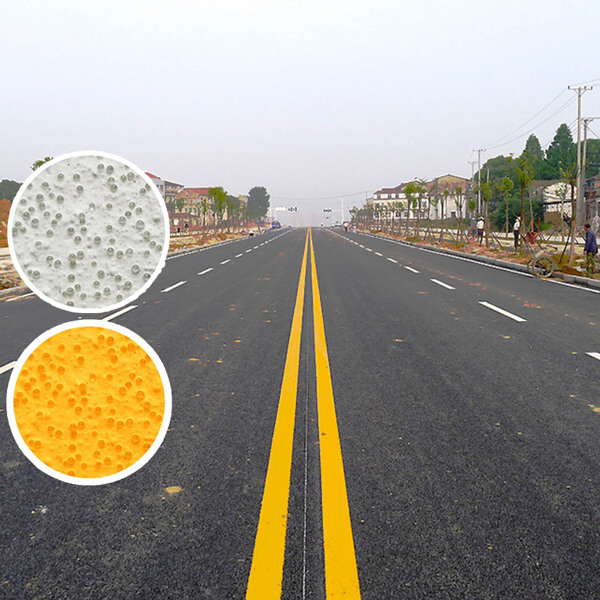
- Insufficient glass bead content
- Low refractive index glass beads
- Incorrect bead drop rate
How to avoid:
- Use certified glass beads (RI ≥ 1.5 / 1.7)
- Adopt premix + surface drop bead system
- Control bead application uniformly
3. Peeling or Delamination
Thermoplastic markings peeling off the pavement surface usually indicate bonding failure.
Main causes:
- Dirty or damp pavement surface
- Low application temperature
- Incompatible primer or no primer used
How to avoid:
- Ensure clean, dry pavement
- Apply material at recommended temperature
- Use proper primer on concrete surfaces
4. Cracking in Hot or Cold Climate
Cracks appearing in road markings indicate poor flexibility control.
Main causes:
- Resin not suited for climate conditions
- Incorrect softening point selection
- Lack of elastic modifiers
How to avoid:
- Use climate-adapted formulations
- Test softening point and flexibility
- Adjust formulation for desert or tropical areas
5. Fading Color (Yellow Turns White or Brown)
Color fading reduces visibility and causes early rejection in inspections.
Main causes:
- Low-grade pigments
- Insufficient UV resistance
- Excessive filler ratio
How to avoid:
- Use weather-resistant pigments
- Balance pigment and filler content
- Conduct accelerated aging tests
6. Uneven Thickness and Profile
Irregular marking thickness affects both durability and appearance.
Main causes:
- Uncalibrated application equipment
- Inconsistent material flow
- Operator inexperience
How to avoid:
- Calibrate screed and spray systems
- Train operators properly
- Maintain steady application speed
7. Poor Skid Resistance
Smooth markings can become slippery, especially in wet conditions.
Main causes:
- Overuse of smooth glass beads
- Lack of anti-skid aggregates
How to avoid:
- Add anti-skid materials where required
- Follow skid resistance standards
8. Failure to Meet Standard Specifications
Markings rejected during inspection lead to rework and disputes.
Main causes:
- Using non-compliant formulations
- Ignoring local standards
How to avoid:
- Confirm standard before production
- Provide test reports and compliance data
9. Short Reflectivity Life
Initial reflectivity is good, but performance drops rapidly.
Main causes:
- Surface-only bead application
- No premix beads inside material
How to avoid:
- Use premixed reflective thermoplastic
- Optimize bead gradation
10. Choosing Lowest Price Instead of Lowest Lifecycle Cost
The most expensive failure is selecting materials based solely on initial price.
How to avoid:
- Evaluate cost per kilometer per year
- Compare durability, not just price per ton
Final Thoughts
Most road marking failures are not caused by one single factor, but by a combination of poor material selection, improper application, and lack of technical understanding.
By focusing on lifecycle performance, standard compliance, and correct施工 practices, contractors and authorities can significantly reduce failure rates and long-term costs.
Technical Support & Consultation
For projects requiring specification review, formulation selection or failure analysis, technical support from experienced manufacturers can prevent costly mistakes before they happen.