
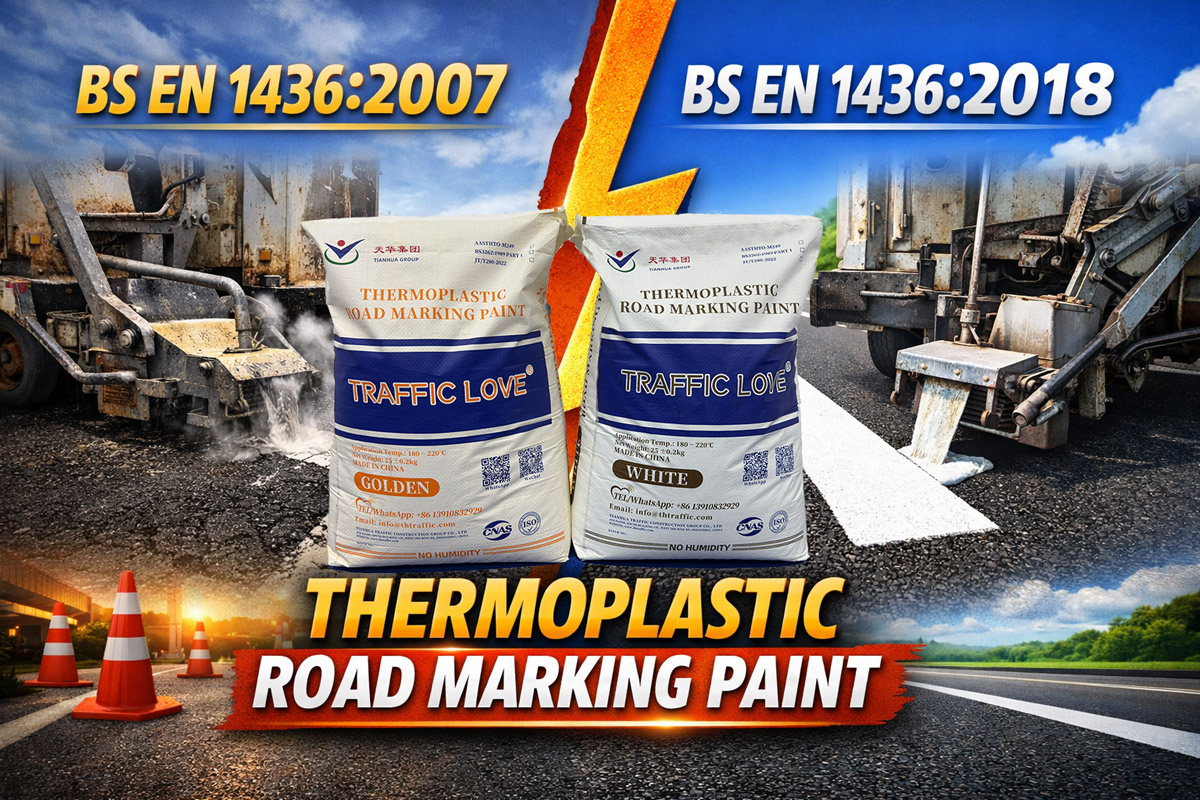
BS EN 1436:2007 vs BS EN 1436:2018 Thermoplastic Road Marking Paint | Standard Comparison
BS EN 1436 is one of the most widely referenced European standards for evaluating the performance of road markings. Rather than specifying formulation details, the standard focuses on functional performance — how markings behave once applied on the road.
Understanding the differences between the 2007 and 2018 editions is essential for manufacturers, contractors, and inspectors involved in thermoplastic road marking projects.
What BS EN 1436 Covers
BS EN 1436 defines performance requirements and test methods for road markings in service, including:
- Night-time visibility (retroreflectivity)
- Daytime visibility (luminance)
- Color compliance
- Skid resistance
- Environmental and wear-related performance
It applies to thermoplastic, cold plastic, paint and other permanent road marking materials.
Why the Standard Was Updated in 2018
Between 2007 and 2018, traffic volumes increased, vehicle headlamp technologies changed, and road safety requirements became more data-driven. The 2018 revision reflects these changes by refining performance classes and clarifying testing and classification methods.
Key Differences Between BS EN 1436:2007 and BS EN 1436:2018
| Item | BS EN 1436:2007 | BS EN 1436:2018 |
| Focus | Basic functional performance | Enhanced performance classification & clarity |
| Retroreflectivity (RL) | Defined but less detailed classification | Clearer RL classes and performance levels |
| Luminance (Qd) | Standard luminance classes | Improved definition and assessment guidance |
| Color Tolerance | Basic chromaticity limits | Refined color boundary interpretation |
| Skid Resistance | Measured but limited guidance | Clearer reference to skid resistance classes |
| Environmental Consideration | Limited reference | More alignment with real traffic and climate conditions |
Retroreflectivity: A Major Practical Difference
While both versions include retroreflectivity requirements, the 2018 edition places stronger emphasis on:
- Consistent measurement methodology
- Classification of performance levels rather than pass/fail only
- Longer-term performance relevance
For thermoplastic road marking paint, this directly affects glass bead selection, premix bead content, and surface bead application.
Impact on Thermoplastic Road Marking Paint Formulation
Under BS EN 1436:2018, thermoplastic materials are expected to deliver more stable performance throughout their service life. This influences formulation in several ways:
- Higher-quality resins for wear resistance
- Optimized premixed glass bead ratios
- Controlled pigment and filler balance for luminance retention
Materials that previously passed the 2007 edition may require formulation adjustment to consistently meet 2018 expectations.
Inspection and Acceptance Differences on Site
From an inspector’s perspective, the 2018 version provides clearer evaluation logic.
- Better-defined performance classes reduce ambiguity
- More consistent interpretation across regions
- Stronger link between laboratory data and field performance
As a result, contractors are expected to demonstrate not only initial compliance but stable performance after traffic exposure.
Which Version Is Used in Projects Today
Most new European and international projects reference BS EN 1436:2018 or later aligned national standards. However, BS EN 1436:2007 may still appear in:
- Legacy contracts
- Ongoing framework agreements
- Projects using older technical specifications
It is essential to confirm the referenced edition during tender preparation.
Common Mistakes in EN 1436 Compliance
- Assuming EN 1436 specifies formulation requirements
- Ignoring long-term reflectivity performance
- Using glass beads without proper certification
- Confusing EN 1436 with EN 1871 (material standard)
EN 1436 vs EN 1871: A Brief Clarification
BS EN 1436 evaluates performance on the road, while BS EN 1871 defines requirements for thermoplastic road marking materials themselves. In practice, compliant projects often require conformity to both standards.
Conclusion
The transition from BS EN 1436:2007 to BS EN 1436:2018 reflects a shift toward performance-based road safety management.
For thermoplastic road marking paint, meeting the 2018 edition is not about meeting higher numbers alone — it is about delivering consistent visibility, durability, and safety under real traffic conditions.
Technical Support
For projects referencing BS EN 1436:2018, early review of material formulation, glass bead system, and application method helps ensure smooth inspection and long-term acceptance.